Chemical Peel vs HydraFacial: Which Treatment Is Right for You?
Achieving smooth, radiant skin can feel like a challenge with so many clinical treatments available today. If you have visited a skin clinic or searched for advanced skincare treatments online, you have likely come across two popular options: Chemical Peels and HydraFacials. Both treatments deliver impressive improvements, but they work in entirely different ways and target distinct skin concerns. Choosing between them depends on your specific skin type, concerns, and lifestyle.
If you are looking for a trusted Skin Clinic in Pimple Saudagar or consulting a leading Dermatologist in PCMC, this detailed guide breaks down everything you need to know about Chemical Peels and HydraFacials so you can make an informed choice for your skin.
Clinical Exfoliation Basics: What You Should Know
Before looking at the two treatments, it is useful to understand why professional exfoliation is so important to healthy skin. Every day, your skin sheds dead cells and secretes natural oils. In misty areas like Pimpri Chinchwad, environmental factors like dust, heat, and sweat combine with excess oil to block your pores, causing dullness, breakouts, or uneven pigmentation.
Home scrubs and face washes will clean your skin’s surface, but clinical treatments will penetrate more deeply to refresh your skin safely. While both Chemical Peels and HydraFacials remove layers of dead skin and encourage the growth of new, healthy skin cells, they achieve those results in entirely different ways.
What Is a Chemical Peel?
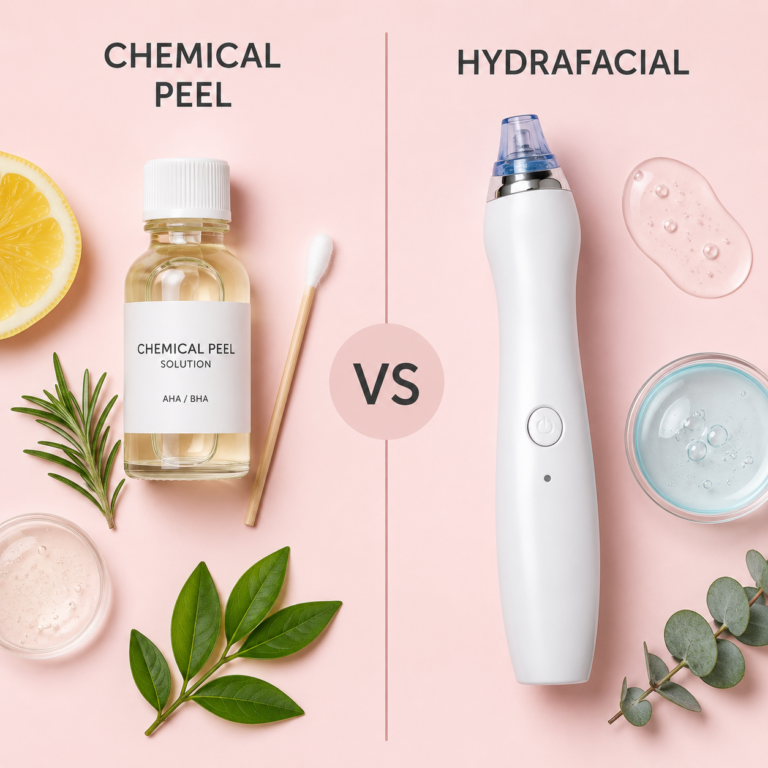
A chemical peel is a medical resurfacing procedure performed with medical-grade solutions to gently remove damaged outer layers of skin gently. During the treatment, a dermatologist applies a specific combination of mild acids to the skin, such as glycolic acid, salicylic acid, lactic acid, or mandelic acid. These solutions break down the biological glue that holds dead skin cells together, allowing the fresh, healthier skin to rise to the surface in the next few days.
How Do Chemical Peels Work?
- Cellular Turnover: The active solutions penetrate the upper layers of skin, encouraging a faster cell renewal process and increasing collagen production over time.
- Targeted Action: Specific acid formulations address specific problems. For example, glycolic acid targets surface pigmentation, while salicylic acid penetrates oily pores to prevent acne.
- Gradual Resurfacing: As the damaged top layer gently flakes away, skin tone becomes noticeably clearer and smoother.
Advantages of a Chemical Peel
- Fades stubborn dark spots, hyperpigmentation, and post-acne marks.
- Helps to reduce active acne outbreaks and deeply congested pores.
- Reduces the look of rough skin texture and fine lines.
- Boosts natural collagen production for firmer, healthier skin.
What To Expect During & After
You may experience a slight tingling or warming sensation for a few minutes during application. Depending on the depth of the peel you choose for your skin, mild redness and light flaking typically occur over 3 to 7 days after treatment. During this healing phase, it is important to protect your skin from direct sun exposure and to use sunscreen every day. Getting a tailored Chemical Peel in PCMC ensures that the formulation strength matches your exact skin tolerance for maximum benefit without harsh irritation.
What is HydraFacial?
What is a HydraFacial? HydraFacial is a non-invasive, multi-step facial treatment that includes deep cleansing, physical exfoliation, automated, painless extraction, and intense hydration. Unlike traditional facials, which often require squeezing or harsh abrasion, the HydraFacial uses a specialized device with patented Vortex Fusion technology.
Core Steps of HydraFacial
- Cleanse & Peel: Gentle liquid exfoliation to reveal a fresh layer of skin without dry patches.
- Extract & Hydrate: Painless vortex suction vacuums out blackheads, whiteheads, and dirt deep within the pores. At the same time, delivering moisture at the same time.
- Fuse and Protect. Potency serums, bursting with antioxidants, hyaluronic acid, and peptides, are infused directly into the freshly cleared layers of skin.
Key Benefits of a HydraFacial
- Delivers immediate hydration, plumping dry or tired skin instantly.
- Effortlessly clears clogged pores, blackheads, and whiteheads without painful manual pressure.
- Restores natural skin radiance with zero redness or recovery time.
- Suitable for almost all skin types, including sensitive skin.
What to Expect During and After
A HydraFacial appointment takes around 30 to 45 minutes and feels like a soothing, cool massage on your face. Because it is completely gentle and non-irritating, there is no peeling or downtime required. You can immediately return to your normal daily activities with visibly plump, glowing skin. Choosing a professional Hydrafacial Treatment in PCMC provides a quick, comfortable reset whenever your skin feels dull or dehydrated.
Chemical Peel vs HydraFacial: Face to Face
To help you make a quick comparison of the two options, here’s a comparison of the two clinical procedures across the key parameters:
- Primary Focus: Chemical Peels focus on deep skin resurfacing, pigment correction, and acne control. HydraFacials are all about immediate hydration, deep pore cleansing, and surface radiance.
- Treatment Process: Peels involve clinical acid solutions to exfoliate chemical bonds. HydraFacials are fluid-based, vortex-suction treatments with micro-exfoliation tips.
- Recovery and Downtime: There will be mild skin flaking for 3 to 7 days depending on the strength of the Chemical Peel. HydraFacials have no downtime.
- Timeline of Results: Peel results are progressive, developing over 1 to 2 weeks as the skin heals. You will see an instant glow the same day as your HydraFacial.
- Treatment Frequency: Treatments are typically given as a clinical series spaced 3 to 4 weeks apart. HydraFacials can be done monthly for skin maintenance or right before special events.
Choosing the Right Treatment for Your Skin
Which treatment is right for you? That depends on your skin’s primary concern, your event timeline, and your skin type.
Go for a Chemical Peel If:
- You want to fade stubborn spots, sun damage, or dark acne scars.
- You have active acne, frequent breakouts, or very oily skin.
- You are looking for structural skin improvement and collagen regeneration.
- You may have some light peeling or flaking for a couple of days.
Go for a Chemical Peel If:
- You want instant skin radiance for a wedding, party or important event.
- You have a problem with dry patches, open pores and blackheads.
- You have delicate, sensitive skin that reacts easily to strong active ingredients.
- You want a relaxing, painless treatment and no downtime peeling.
Can You Combine Both Treatments?
Yes, combining both procedures often delivers optimal results! Dermatologists frequently design comprehensive skin care plans where a Chemical Peel targets deep pigmentation or active breakouts, and a HydraFacial is scheduled a few weeks later to restore moisture, soothe the skin, and maintain healthy hydration levels.
Why Expert Dermatological Guidance Matters
Every person’s skin barrier, oil production, and sensitivity levels are unique. Performing clinical treatments without proper professional evaluation can lead to skin irritation or suboptimal outcomes. Consulting a qualified Dermatologist in PCMC ensures your skin is accurately assessed before any procedure begins.
At Bodysutra Skin Clinic, located conveniently for residents of Pimpri Chinchwad, Pimple Saudagar, and Rahatani, every treatment starts with a detailed skin assessment. By examining your skin’s moisture levels, sensitivity, and specific concerns, our team customizes treatment parameters to ensure a safe, effective, and lasting skin transformation.
Frequently Asked Questions (FAQs)
Yes, both procedures are safe when administered by experienced skin professionals. Indian skin requires specific care regarding post-treatment pigmentation, so custom peel formulations and gentle HydraFacial serums are selected specifically for darker and sensitive skin tones.
A HydraFacial delivers noticeable smoothness and a glow after a single session, making it a great addition to your routine. Chemical Peels generally require a planned series of 3 to 6 sessions spaced a few weeks apart to fade dark marks or significantly clear persistent acne.
For both treatments, consistent use of a broad-spectrum sunscreen is crucial. After a Chemical Peel, avoid picking at flaking skin and keep your skin well hydrated with a gentle, non-comedogenic moisturizer.
Take the Next Step Toward Healthy Skin
Choosing the right clinical treatment does not have to be confusing. Whether your skin needs deep corrective resurfacing or a refreshing boost of hydration, taking a personalized approach ensures the best possible results. Contact Bodysutra Clinique today to schedule your consultation and discover the ideal treatment plan for clear, glowing skin.