
Dry Skin in Winter: What Helps and When to See a Dermatologist
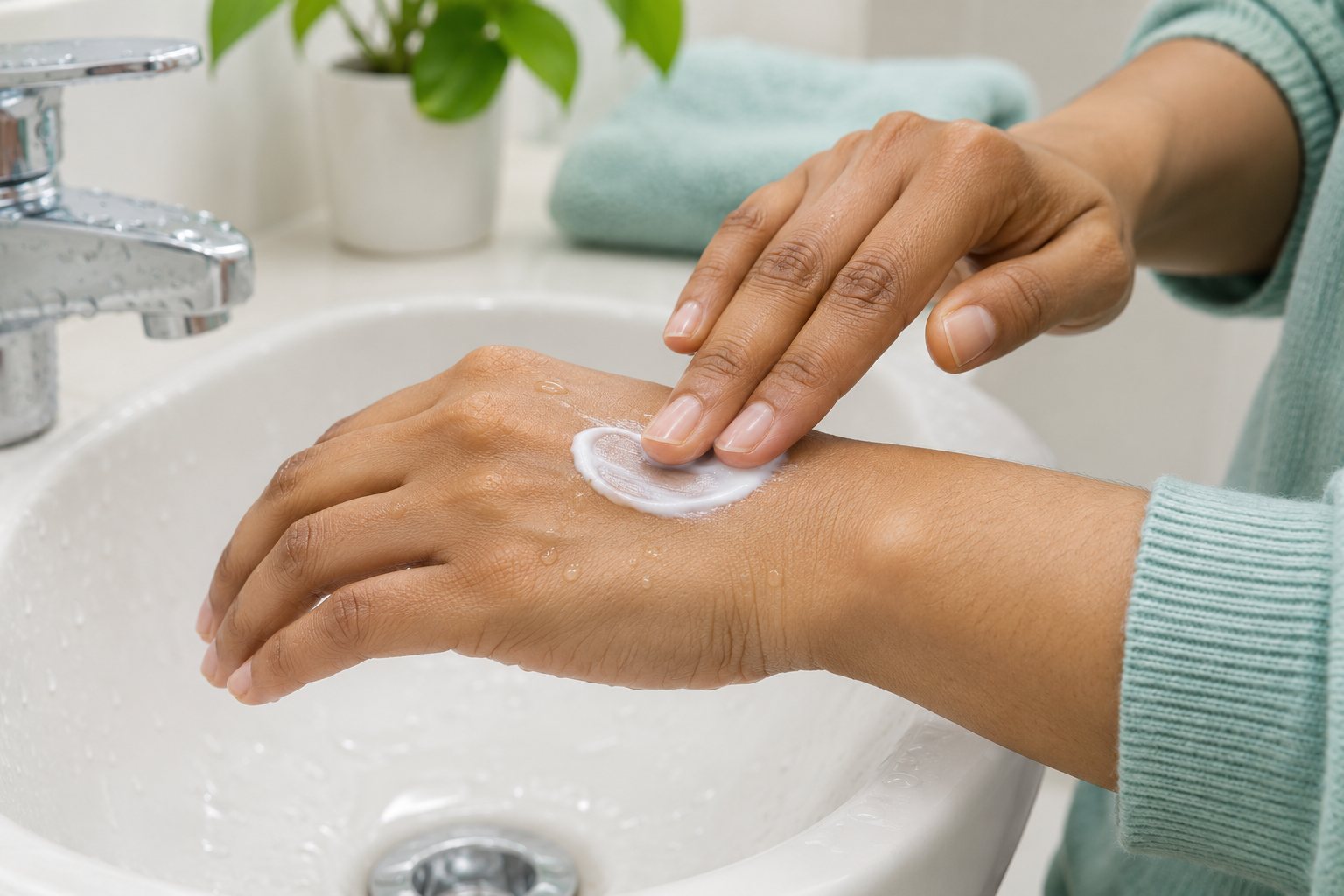
If your cheeks feel tight after washing or flakes appear around your mouth by lunchtime, winter dryness may be part of the problem. You might notice dry hands, rough shins or moisturiser that seems to wear off quickly. A few changes to the way you wash and moisturise can often help. If the same patch keeps coming back, or the itch starts disrupting sleep, it is worth finding out what is causing it.
Why Does Skin Get Dry in Winter?
Your skin’s outer layer helps hold in water. When the air is dry, moisture escapes more easily. Long hot showers, harsh cleansers and scrubbing can make the problem worse. Many people first notice a tight feeling, rough patches, fine flakes or mild itching. Frequent handwashing can leave the knuckles particularly dry.
A dry patch can also develop after switching to a new skin product or using several exfoliating products together. If the problem started after a change in your routine, note the timing and where it appears. Those details can help you identify a possible irritant and are useful at a consultation.
A Simple Routine for Dry or Flaky Skin
Wash Gently and Keep Showers Short
Use lukewarm water and aim for a five- to ten-minute shower. A gentle, fragrance-free cleanser can help if ordinary soaps leave your skin tight. Wash your face with your fingertips and pat it dry with a soft towel. Scrubbing off flakes may leave the skin more irritated.
Apply Moisturiser While Your Skin Is Still Damp
Apply a fragrance-free moisturiser just after washing, while your skin is slightly damp. Creams or ointments can be more effective than thin lotions for very dry areas. A cream that feels comfortable on your face and a thicker product for hands or shins may be easier to stick with than using the same product everywhere. Reapply hand cream after washing your hands when they feel dry.
Keep Sun Protection in Your Morning Routine
Before going outdoors, use a broad-spectrum, water-resistant sunscreen with SPF 30 or higher on exposed skin. If a new product repeatedly stings, stop using that product and discuss the reaction if it persists. If irritation started while using a prescribed skin treatment, ask the prescribing clinician how to adjust your routine.
When Could Flaking Be More Than Winter Dryness?
Ordinary dryness can improve with regular moisturising and gentler washing. A patch that keeps returning in the same place, a rash that spreads, or itching that persists deserves closer attention. Eczema, contact dermatitis and psoriasis can also cause dryness or scaling. In deeper skin tones, irritation can look darker, greyish or purple as well as red. Appearance alone is an unreliable way to tell these conditions apart.
Make an appointment if the skin stays uncomfortable despite consistent gentle care, if cracks keep bleeding, or if itching disturbs your sleep. Seek prompt medical advice if affected skin becomes increasingly painful, warm or swollen, develops pus, or is accompanied by fever.
What Can a Dermatologist Do for Persistent Dry Skin?
A dermatologist can examine the pattern, ask about soaps and skincare products, and review past flare-ups or treatments. Bring a list or photos of the products you use and, if the problem comes and goes, a clear photo taken during a flare. Treatment depends on the cause. It may involve a different moisturising routine, identifying a product that triggers irritation, or using prescription treatment when a condition such as eczema is diagnosed.
If you live in Pimple Saudagar or nearby in Pune and are dealing with persistent flaking, itching or recurring patches, you can consult a skin specialist in Pimple Saudagar at Bodysutra Clinique in nearby Rahatani. Bring your current skincare list so you can discuss what to keep and what may be aggravating your skin.
Frequently Asked Questions
Why Does My Face Feel Dry Even After I Moisturise?
Hot water, a drying cleanser or a very light lotion can make dryness harder to manage. Try applying a fragrance-free cream to slightly damp skin and simplify your routine. If discomfort continues, an assessment can help identify other causes.
Can Oily Skin Become Dry and Flaky in Winter?
Yes. Your skin can still feel greasy in some areas and develop dry patches in others. Use a gentle cleanser and a moisturiser you tolerate. Persistent or recurring flaking around the nose, eyebrows or scalp is worth mentioning to a dermatologist.
Should I Exfoliate Flaky Skin?
Avoid scrubbing dry, irritated patches. Give the skin a chance to settle with gentler cleansing and regular moisturising. Ask your dermatologist about any prescribed exfoliating or acne treatments if your skin repeatedly burns or peels.
How Can I Tell Whether Dry Skin Is Eczema?
Dryness alone cannot confirm eczema. Recurring itchy patches or changes that persist despite regular moisturising are reasons to book an assessment. Your dermatologist can consider eczema and other possible causes based on your history and examination.