Dermatologist vs Cosmetologist: Which Skin Care Expert Should You Choose?
When you are dealing with a stubborn breakout, an uneven skin tone, or a sudden rash, your first instinct is probably to seek professional help. But as you search for a qualified skin care specialist, you might find yourself confused by two common terms: dermatologist and cosmetologist.
While both professionals work to improve your appearance, their training, scope of work, and medical authority are completely different. Choosing the wrong one can lead to wasted time, money, or worse, untreated skin conditions.
If you are looking for a reliable skin doctor in PCMC to guide your skin health journey, understanding the difference between dermatologist and cosmetologist options is the critical first step. At Bodysutra Clinique in Pimpri Chinchwad, led by the renowned Dr. Vrushali Nikam, we believe that informed patients make the best choices for their skin. Let’s break down the dermatologist vs cosmetologist debate so you can decide exactly who to visit for your needs.
Who Is a Dermatologist?
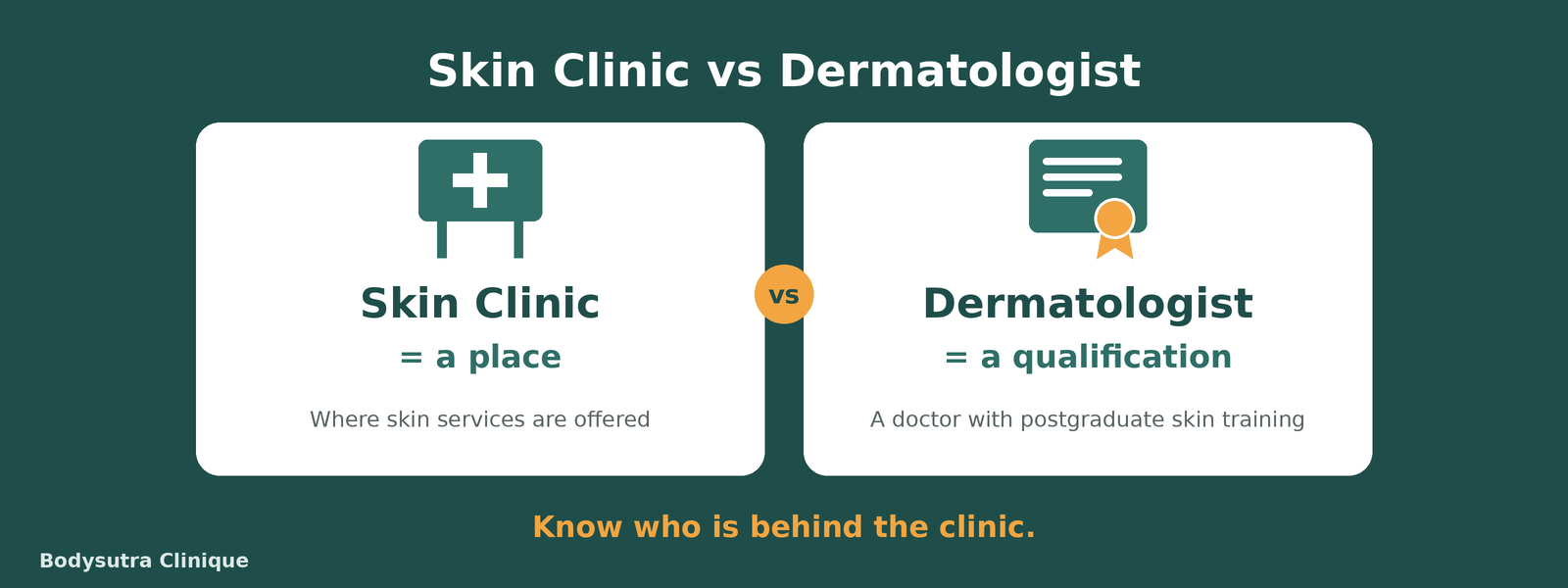
A dermatologist is a medical doctor who has completed additional training to specialize in the diagnosis, treatment, and management of conditions involving the skin, hair, and nails. They are medical doctor,s so their training is extensive. They spend many years in rigorous medical school, followed by specialized residency training in dermatology.
They can see right through your skin, thanks to their extensive medical training. They understand how internal health problems, genetics, and environmental factors all combine to cause external symptoms. Be it Pimple Saudagar, Rahatani, or anywhere in the extended Pimpri Chinchwad region, a dermatologist is the ultimate authority you can approach for real skin health concerns.
Core Responsibilities of a Dermatologist:
- Identifying difficult skin conditions such as eczema, psoriasis and rosacea.
- Severe cystic or hormonal acne that does not respond to over the counter products.
- Conducting medical procedures; including mole removals, skin biopsies, skin cancer screenings.
- Suggesting prescription topical creams, oral antibiotics, and more advanced systemic medications.

Who is a Cosmetologist?
A cosmetologist is a beauty and aesthetic professional who specializes in the cosmetic and aesthetic aspects of the skin, hair and nails. A cosmetologist is not a medical doctor like a dermatologist. Instead, they receive specialized training at a beauty school or technical institute and a license to perform cosmetic procedures.
Cosmetologists know all about keeping skin looking beautiful, glowing and well maintained. But they don’t treat the underlying medical illness. If you have a rash that hasn’t been diagnosed or cystic acne severe, a cosmetologist cannot prescribe medication or perform diagnostic tests
- Performing advanced cosmetic facials, chemical peels and micro dermabrasion.
- Recommending daily skin care routines based on the surface skin types.
- Performing aesthetic treatments such as lash lifts and make up application and hair styling.
- Non medical therapies to improve overall skin texture and hydration levels.
Quick Comparison: Dermatologist vs Cosmetologist
| Feature | Dermatologist | Cosmetologist |
|---|---|---|
| Medical Degree? | Yes (MBBS, MD/DVD) | No (Diploma or Certification) |
| Primary Focus | Skin health, diseases, and medical treatments | Aesthetics, surface appearance, and grooming |
| Can Prescribe Meds? | Yes, oral and topical medical prescriptions | No, only retail or cosmetic product recommendations |
| Treats Diseases? | Yes (Acne, Eczema, Psoriasis, Cysts, Infections) | No (Focuses on healthy skin maintenance) |
| Key Procedures | Biopsies, laser surgeries, medical grade peels | Facials, superficial exfoliating, makeup, hair styling |
When to Visit a Dermatologist
When your skin flares up, it can be important to book a quick spa facial, but certain signs mean you need to see a real medical professional. Knowing when to see a dermatologist ensures that underlying issues don’t worsen over time.
If you have any of the following, you should make an appointment with a medical expert:
1. Persistent or Severe Acne
If you have painful, deep nodules under the skin that leave permanent scars, a beauty facial will not solve the problem. Chronic acne is often a hormonal or inflammatory medical issue that requires targeted prescription therapies, specialized chemical peels, or medical lasers.
2. Changing Moles or Sudden Growths
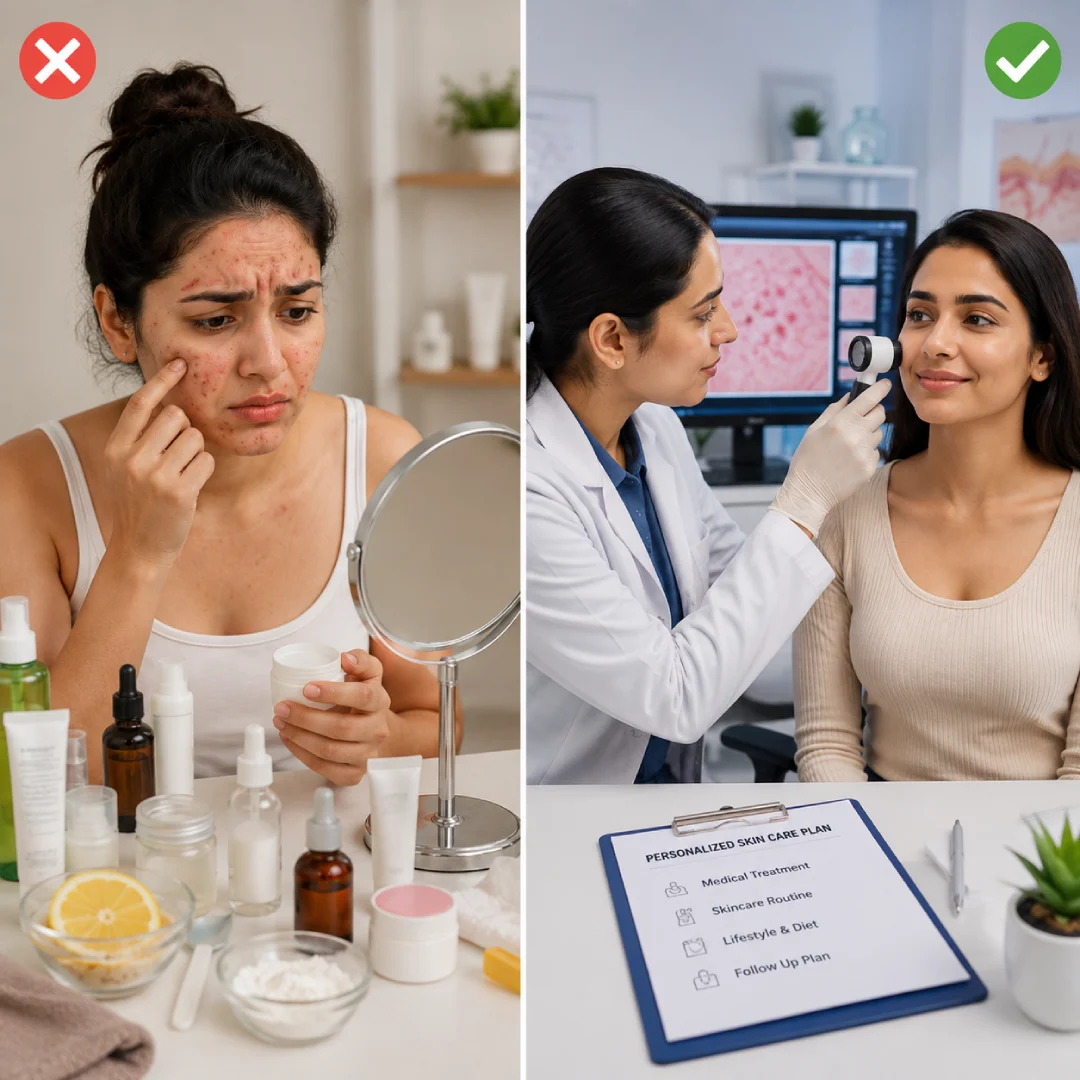
A new mole, or an old one that is rapidly changing shape, size, color, or starting to bleed, requires immediate medical evaluation. A dermatologist uses a specialized tool called a dermatoscope to screen for abnormal cells and perform biopsies if necessary.
3. Rashes, itching, or swelling
Signs of eczema, contact dermatitis or psoriasis can include flaky patches, severe itching and persistent redness. A dermatologist can identify the exact trigger and prescribe steroid creams or non-steroidal anti-inflammatory treatments for quick relief.
4. Excessive Hair Loss or Scalp Issues
Hair loss isn’t always just about using the wrong shampoo. This may be caused by nutritional deficiencies, stress, autoimmune diseases, or hormonal changes. Because hair is an extension of the skin system, a dermatologist can perform blood tests or scalp evaluations to treat the root cause.
Why Bodysutra Clinique Offers the Best of Both Worlds
In modern aesthetics, health and beauty often beautifully blur the line. The many advanced anti-aging treatments available today, such as Botox, dermal fillers, and medical-grade laser resurfacing, require a sound knowledge of facial anatomy and a good aesthetic eye.
At Bodysutra Clinique, you don’t have to choose between medical safety and beautiful results in Pimpri Chinchwad. Dr. Vrushali Nikam is a very trusted expert and leads the clinic. We bridge the gap between full clinical care and advanced cosmetic procedures.
Hence, if you are looking for the treatment of a medical skin disorder or want to rejuvenate your skin with a safe and advanced aesthetic treatment, our clinic provides highly personalized care to the residents of Pimple Saudagar, Rahatani, and neighbouring localities.
Final Thoughts: Making Your Choice
When deciding between a dermatologist and a cosmetologist, look at your skin’s current condition. If your skin is generally healthy but needs a boost in glow, texture, or basic relaxation, a certified cosmetologist is a great fit.
However, if your skin is painful, irritated, changing, breaking out severely, or showing signs of a medical condition, you need a doctor. Prioritizing your medical skin health first always lays the perfect foundation for long-lasting beauty.