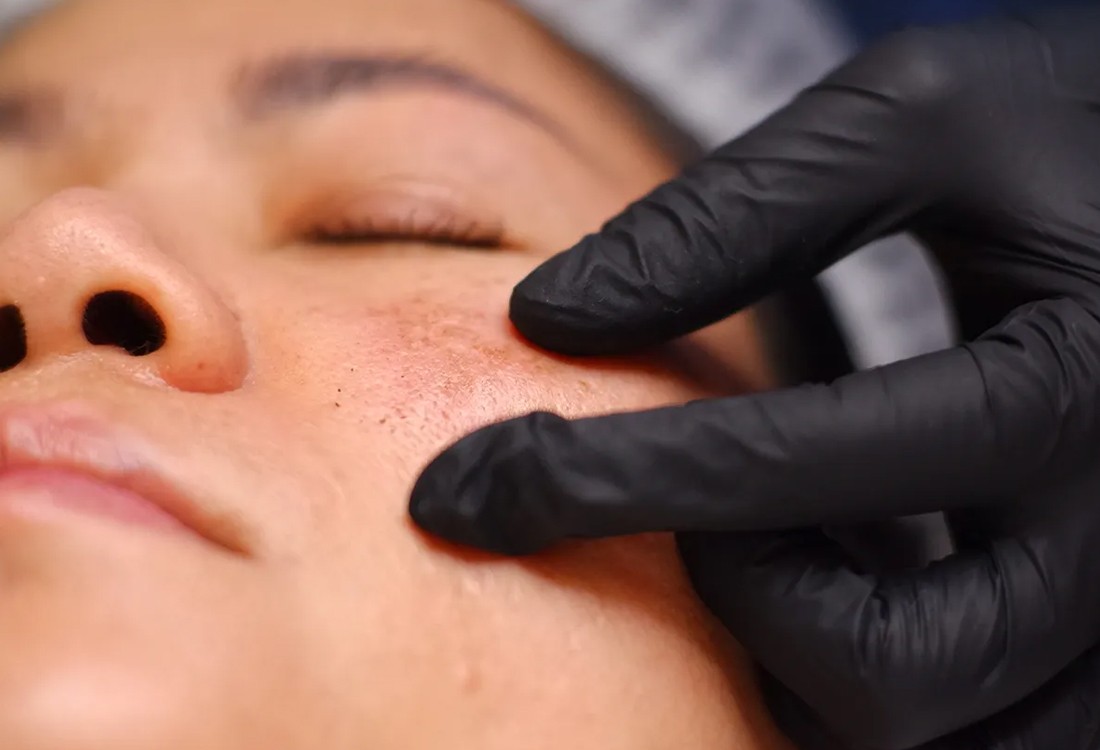

Red, Itchy Skin? How to Tell if It’s Psoriasis or Eczema

Did you know that nearly 40% of patients with chronic skin conditions receive an incorrect initial diagnosis? 

Statistic banner stating that 40 of patients receive incorrect initial diagnosis

As a dermatologist, I witness this scenario unfold weekly in my practice: patients who have spent months or even years treating the wrong condition, growing increasingly frustrated as their symptoms persist or worsen.

Today, I want to share the real stories behind these mix-ups and give you the tools to advocate for accurate diagnosis and effective treatment. Whether you’re dealing with mysterious skin patches yourself or supporting a loved one through their skin condition, this guide will help you navigate the often-confusing world of chronic skin conditions.

Patient Stories: When Diagnosis Goes Wrong

Let me tell you about Maya, a 28-year-old teacher who came to my clinic after two years of failed eczema treatments. Her previous doctor had prescribed steroid creams and moisturisers, but the thick, scaly patches on her elbows and knees kept returning. Within minutes of examining her skin, I could see the telltale signs of plaque psoriasis: well-defined, raised lesions with silvery scales that her previous treatments had actually been making worse.

Then there’s Amit, a 35-year-old man with wheatish skin, whose psoriasis went undiagnosed for three years because the condition appeared as dark purple patches rather than the “textbook” red lesions most medical resources depict. His case highlights a critical issue in dermatology: conditions often present differently on darker skin tones, leading to delayed or incorrect diagnoses.

These stories aren’t unique. They represent a systemic challenge in skin condition diagnosis that affects millions of patients worldwide.

I will help you differentiate between eczema and psoriasis based on its location, the itching you experience, triggers and patterns, and associated connections. At the end of this blog, you will find a quiz to judge your situation. 

Before we begin differentiating, here’s what both conditions mean:

Psoriasis

Psoriasis is an autoimmune condition in which the immune system causes skin cells to multiply too rapidly. This creates thick, scaly, silvery patches (plaques) that are often raised and well-defined. It’s chronic and non-contagious and tends to appear on elbows, knees, scalp, and lower back. The patches are typically dry and may crack or bleed.

Eczema

Eczema (atopic dermatitis) is an inflammatory skin condition that causes red, itchy, inflamed patches. The skin appears rough, leathery, or weepy, and the affected areas are usually less well-defined than psoriasis plaques. It commonly affects the face, hands, inner elbows, and the back of the knees. Eczema is often triggered by allergens, irritants, or stress, and tends to run in families with a history of allergies or asthma.

Key Difference: Psoriasis creates thick, scaly plaques due to rapid cell turnover, while eczema causes inflamed, itchy patches due to skin barrier dysfunction and inflammation.

With that being said, now let’s dive deep. 

The Location: Where it occurs

One of the most reliable ways to distinguish between psoriasis and eczema is to understand where each condition typically appears on the body. Think of your skin as a map, with each condition having its preferred territories.

Psoriasis is normally seen at:

  • The back (extensor surfaces) of the elbows
  • The front of the knees and shins
  • Scalp, especially along the hairline
  • Lower back
  • Nails (pitting, thickening, or separation)
  • Areas of previous injury or trauma

Eczema is normally seen at:

  • The inside (flexor surfaces) of the elbows
  • Behind the knees
  • Face and neck, particularly in children
  • Hands, wrists, and ankles
  • Areas that bend and flex frequently

This isn’t a hard rule; both conditions can appear anywhere, but location patterns provide valuable diagnostic clues. 

I often tell patients to photograph their affected areas over time, noting which locations flare up most frequently.

Beyond Location: What Your Skin Texture Reveals

The way your skin looks and feels can tell a compelling diagnostic story. Here’s what I look for during examinations:
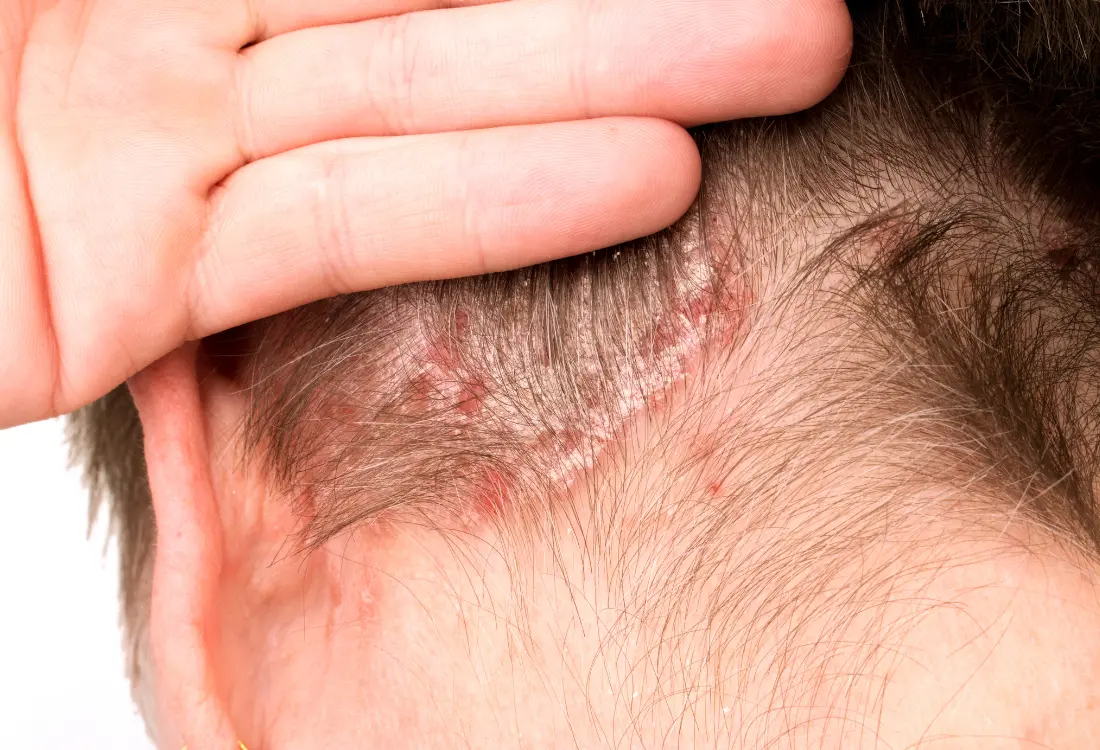
Psoriasis Characteristics:

scalp with visible red, flaky psoriasis patches and a hand parting the hair to show affected area
  • Thickness: Raised, well-defined plaques that you can feel with your eyes closed
  • Scaling: Thick, silvery-white scales on lighter skin; grey or darker scales on darker skin tones
  • Borders: Sharp, clear edges where affected skin meets normal skin
  • Symmetry: Often appears in matching locations (both elbows, both knees)
  • Bleeding: Pinpoint bleeding when scales are removed (Auspitz sign)

Eczema Features:

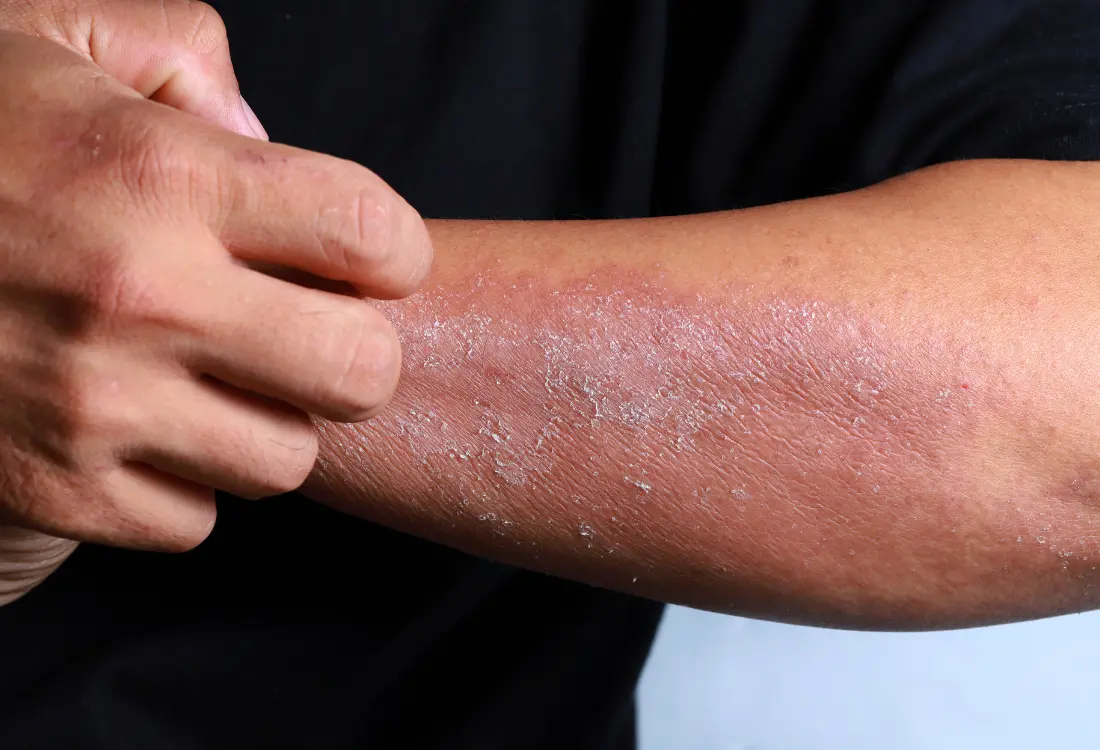
Close-up of a person scratching eczema-affected dry and flaky skin on their forearm
  • Texture: Dry, rough, sometimes leathery patches
  • Appearance: Red and inflamed on lighter skin; darker brown, purple, or grey on darker skin
  • Pattern: Often asymmetrical and poorly defined edges
  • Behaviour: May weep, crust, or form small bumps when scratched
  • Lichenification: Thickened skin from chronic scratching

Does Itching Feel Different in Both Cases?

The intensity and quality of itching can provide crucial diagnostic information. Patients consistently describe these differences:
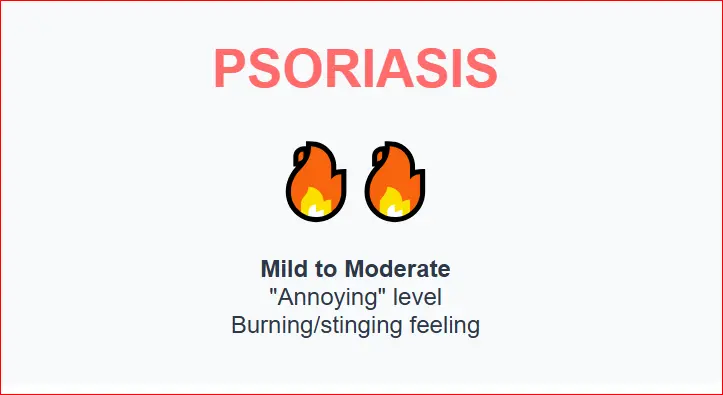
Psoriasis Itch:

Psoriasis severity chart showing two burning icons indicating mild to moderate discomfort with stinging or burning sensation
  • Generally mild to moderate
  • Often described as “annoying” rather than unbearable
  • May be more noticeable during stress or weather changes
  • Some patients report burning or stinging sensations

Eczema Itch:

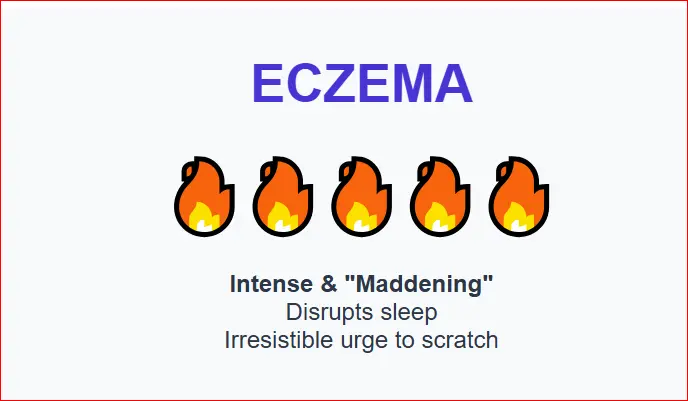
Eczema severity illustration showing five burning icons indicating intense itching, sleep disruption, and an irresistible urge to scratch
  • Intense, often described as “maddening”
  • Frequently disrupts sleep
  • Creates an irresistible urge to scratch
  • Worst during evening hours or temperature changes
  • Can lead to scratch-induced bleeding and infection

One patient described her eczema itch as “feeling like fire ants crawling under my skin,” while patients with psoriasis more commonly report “tightness and occasional irritation.”

Age, Timeline, and Trigger Patterns

Understanding when and how your symptoms began can provide valuable diagnostic clues:
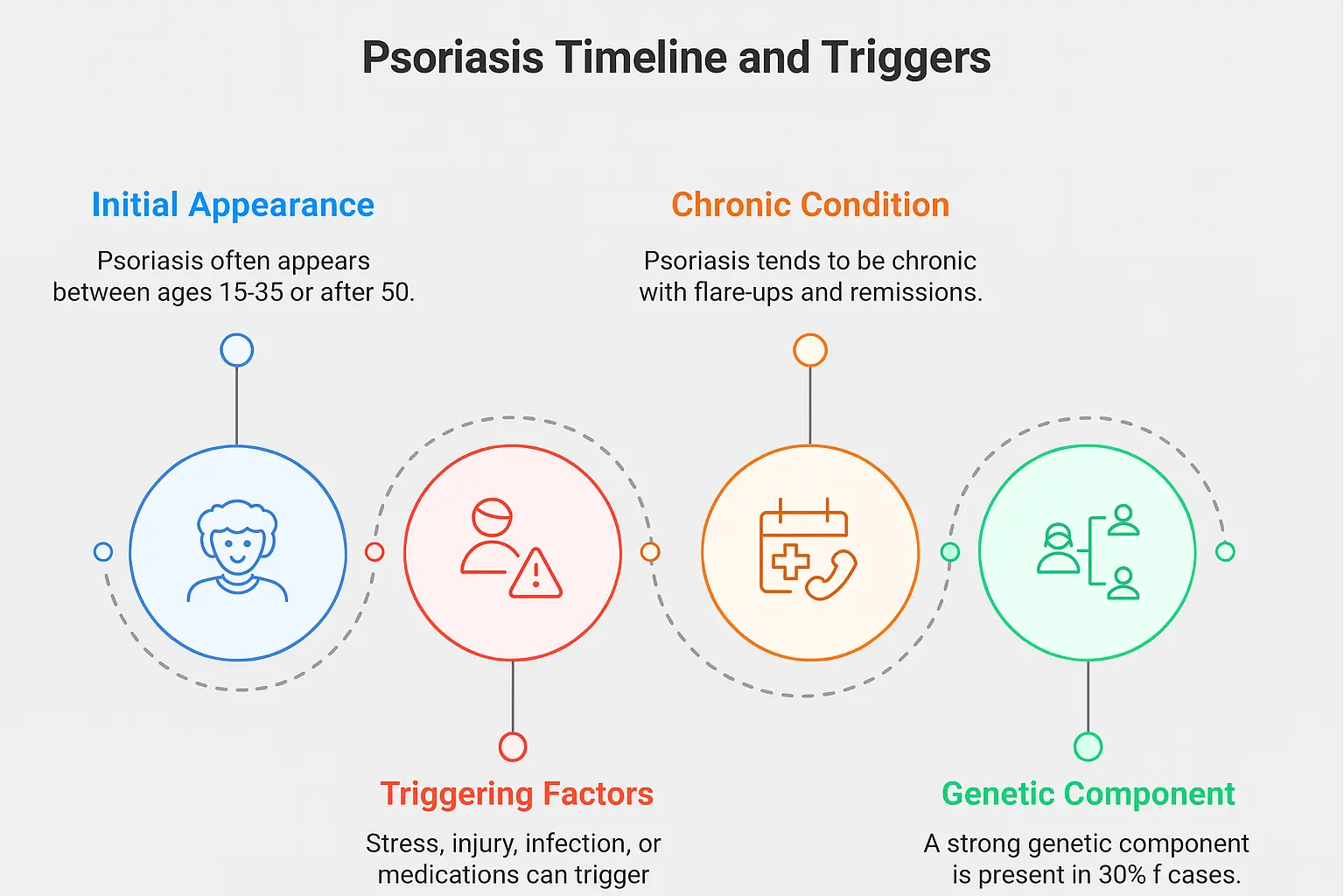
Psoriasis Timeline:

  • Often first appears between ages 15-35 or after age 50
  • May be triggered by stress, injury, infection, or certain medications
  • Tends to be chronic with periods of flare-ups and remission
  • Strong genetic component (30% have family history)
Infographic explaining psoriasis triggers, timeline, and genetic factors with icons and text about onset, chronic nature, and common triggers

Eczema Pattern:

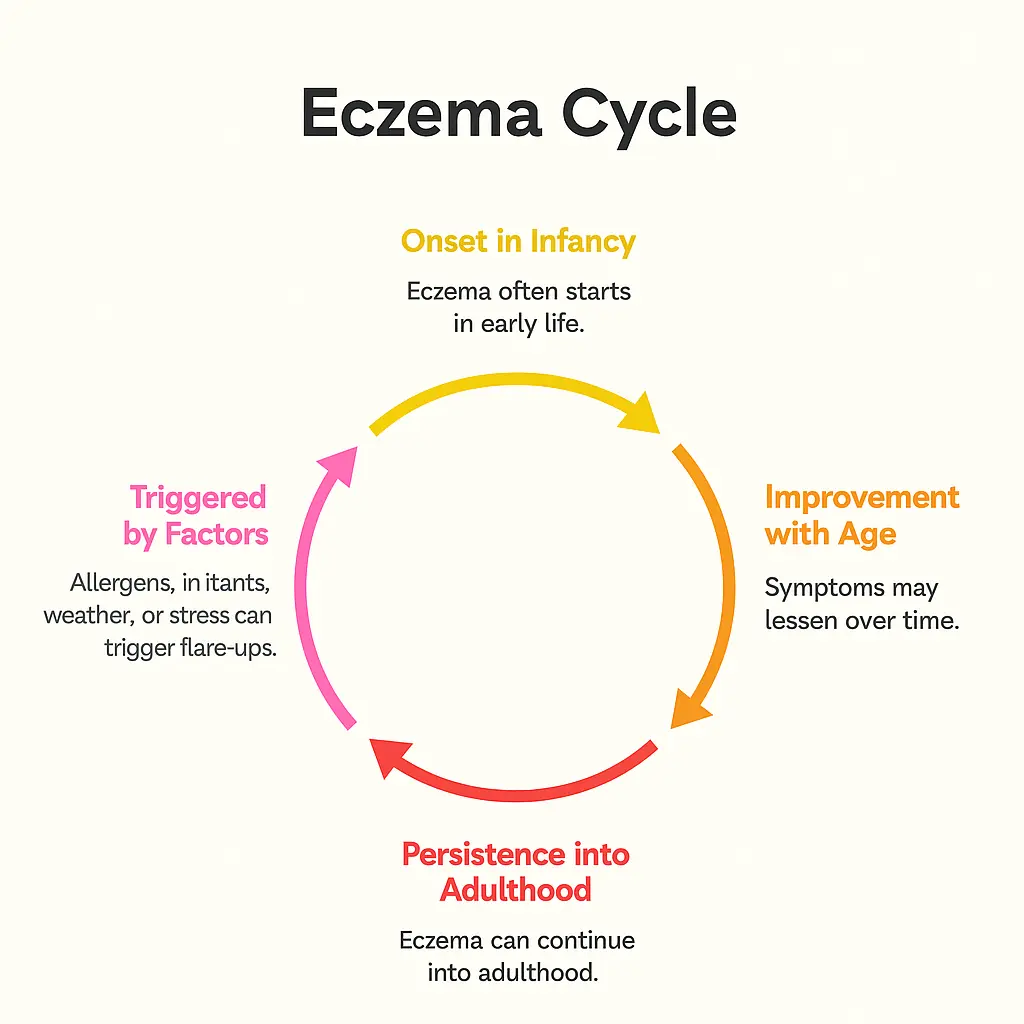
  • Frequently begins in infancy or early childhood
  • May improve with age, but can persist into adulthood
  • Often part of the “atopic triad” (eczema, asthma, allergies)
  • Triggered by allergens, irritants, weather changes, or stress
Eczema life cycle diagram showing stages from infancy onset, triggering factors, persistence into adulthood, and improvement with age

The Hidden Connections: What Happens Beyond Your Skin

Both conditions affect more than just your skin, but in different ways:

Psoriasis Associations:

  • Up to 30% develop psoriatic arthritis (joint pain and swelling)
  • Increased risk of cardiovascular disease
  • Higher rates of depression and anxiety
  • Potential links to inflammatory bowel disease

Eczema Connections:

  • Strong association with food allergies and asthma
  • Increased risk of skin infections due to barrier dysfunction
  • Sleep disruption affecting quality of life
  • Higher rates of ADHD in children with severe eczema

Understanding these connections helps explain why proper diagnosis matters beyond just skin comfort.

Interactive Assessment: When Should You See a Dermatologist?

                                      Important Note


This assessment is designed to help you understand when professional evaluation is needed, not to replace medical diagnosis. Only a qualified dermatologist can accurately diagnose skin conditions.

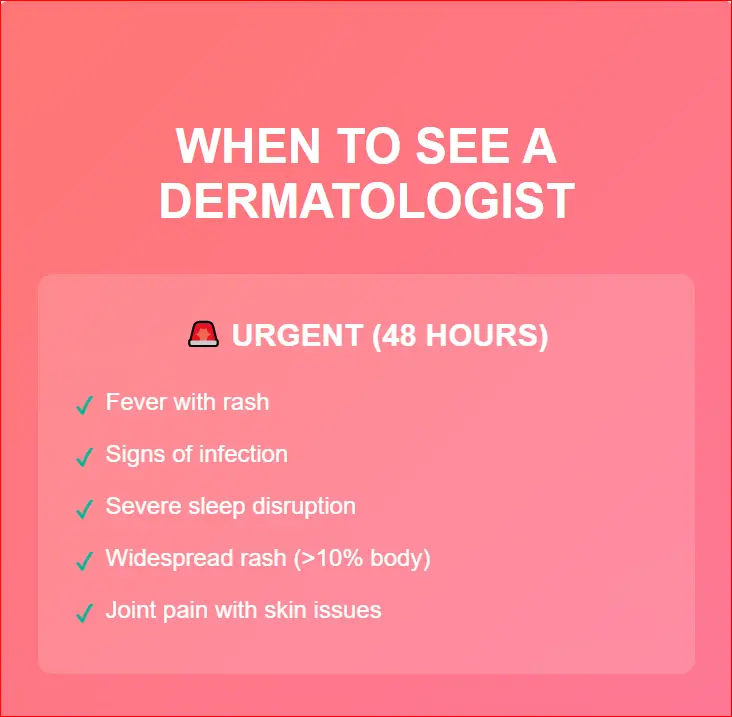
Urgent dermatology consultation infographic listing symptoms like fever with rash, infection, sleep disruption, widespread rash, and joint pain

SECTION 1: Immediate Dermatology Consultation (Within 48 Hours)

Check any that apply to your situation:

  • Sudden widespread rash covering more than 10% of your body
  • Fever with skin symptoms or feeling systemically unwell
  • Signs of infection such as pus, red streaking, or warm, tender skin
  • Severe itching preventing sleep for multiple nights
  • Joint pain or swelling accompanying skin symptoms
  • Difficulty breathing or swallowing with a skin rash
  • Skin bleeding that won’t stop or keeps recurring

If you checked ANY of these boxes, contact a dermatologist or urgent care immediately.

SECTION 2: Regular Dermatology Appointment (Within 2-4 Weeks)

Check any that apply:

  • Persistent symptoms lasting more than 2 weeks despite over-the-counter treatment
  • Recurring episodes of skin problems every few months
  • Quality of life impact affecting work, school, or relationships
  • Family history of psoriasis, eczema, or autoimmune conditions
  • Nail changes, including pitting, thickening, or separation
  • Scalp involvement with thick scaling or hair loss
  • Treatment failure with previous prescriptions not working
  • Skin colour concerns feeling your condition may be misdiagnosed due to skin tone

If you checked 2 or more boxes, schedule a dermatology consultation.

SECTION 3: Consider a Second Opinion

Check if any apply:

  • Diagnosis uncertainty – your current diagnosis doesn’t feel right
  • Treatment plateau – no improvement after 3 months of treatment
  • Multiple failed treatments without a clear explanation
  • Worsening symptoms despite following treatment plans
  • Concerns about bias in your medical care
  • Complex presentation with symptoms that don’t fit typical patterns

If you checked ANY of these, seeking a second opinion is reasonable and appropriate.

Why Getting the Right Diagnosis Matters

The treatments for psoriasis and eczema are fundamentally different because the underlying disease processes are different:

Psoriasis Treatment Focus:

  • Slowing down excessive skin cell production
  • Reducing immune system overactivity
  • Anti-inflammatory medications (topical, oral, or injectable)
  • Phototherapy to normalise skin cell turnover

Eczema Treatment Approach:

  • Repairing the skin barrier function
  • Identifying and avoiding triggers
  • Intensive moisturising and gentle skincare
  • Antihistamines and anti-inflammatory treatments

Using the wrong treatment approach can actually make some conditions worse. I’ve seen patients whose psoriasis flared dramatically when treated with eczema protocols, and vice versa.

Living Well With Chronic Skin Conditions

Regardless of your specific diagnosis, some principles apply to managing any chronic skin condition:

Universal Skin Health Strategies:

  • Maintain consistent, gentle skincare routines
  • Identify and avoid your personal triggers
  • Manage stress through proven techniques
  • Protect your skin from injury and harsh weather
  • Stay connected with supportive healthcare providers

Mental Health Considerations:

Both conditions can significantly impact mental health. If your skin condition affects your emotional well-being, don’t hesitate to seek counselling or support groups. Many patients find that addressing the psychological aspects of chronic skin conditions improves their overall treatment outcomes.

Your Next Steps

If you’re reading this because you’re struggling with undiagnosed or poorly controlled skin symptoms, know that effective treatments exist for both psoriasis and eczema. The key is getting an accurate diagnosis from a qualified dermatologist who takes time to understand your unique presentation.

Action Items:

  1. Document your symptoms with photos and notes about triggers
  2. Prepare a list of questions for your dermatologist appointment
  3. Bring all previous treatments and results to your consultation
  4. Don’t hesitate to advocate for yourself if something doesn’t feel right

When it comes to your skin, you are your own best advocate. If your current treatment isn’t working or your diagnosis doesn’t seem to fit your experience, it’s completely appropriate to seek a second opinion. Your skin health is worth the investment in proper diagnosis and treatment.

Schedule a Consultation:

If you’re struggling with chronic skin symptoms, our dermatology practice offers comprehensive evaluations and personalised treatment plans. Contact us.

Medical Disclaimer: This information is for educational purposes only and should not replace professional medical advice. Always consult with a qualified healthcare provider for accurate diagnosis and treatment recommendations.

The names of patients are hypothetical and do not bear any resemblance to actual individuals.