What’s the Difference Between a Skin Clinic and a Dermatologist?
Search for a skin clinic in PCMC and you will find plenty of options, from doctor-run practices to beauty-led centres that simply use "clinic" in the name. The signboards look alike. The qualifications behind them often don't.
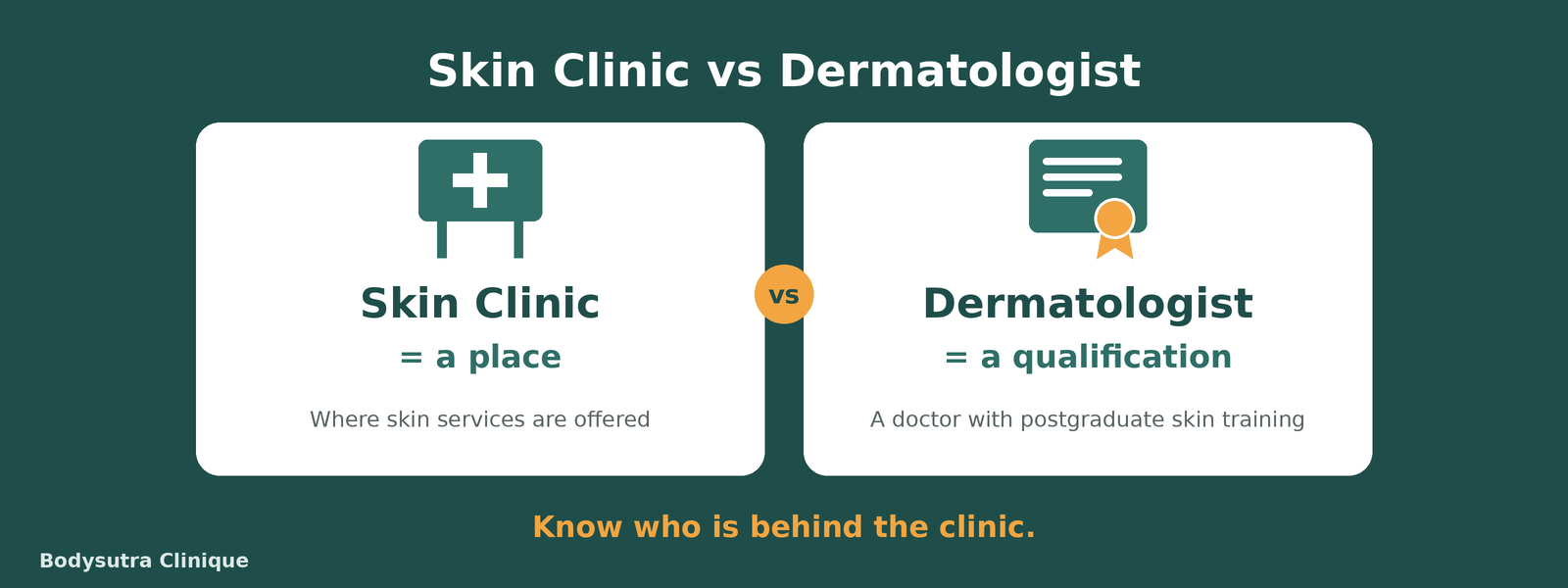
That is the real answer to this question. A skin clinic is a place. A dermatologist is a person with a specific kind of medical training. A clinic may be run by a dermatologist, by a doctor from another field, or by people with no medical degree at all. This guide explains how to tell them apart, which one suits your problem, and what to check before you book.
The short answer
A dermatologist is a medical doctor with postgraduate training in conditions of the skin, hair and nails. A skin clinic is a business that offers skin services, and its quality depends on who examines you and who performs your treatment.
"Skin clinic" describes where care is offered, not what training the person has. Phrases like "skin specialist" or "skin expert" don't confirm a dermatology qualification either. That is why the first thing to find out is who is behind the clinic, not how the clinic describes itself.
What is a dermatologist?
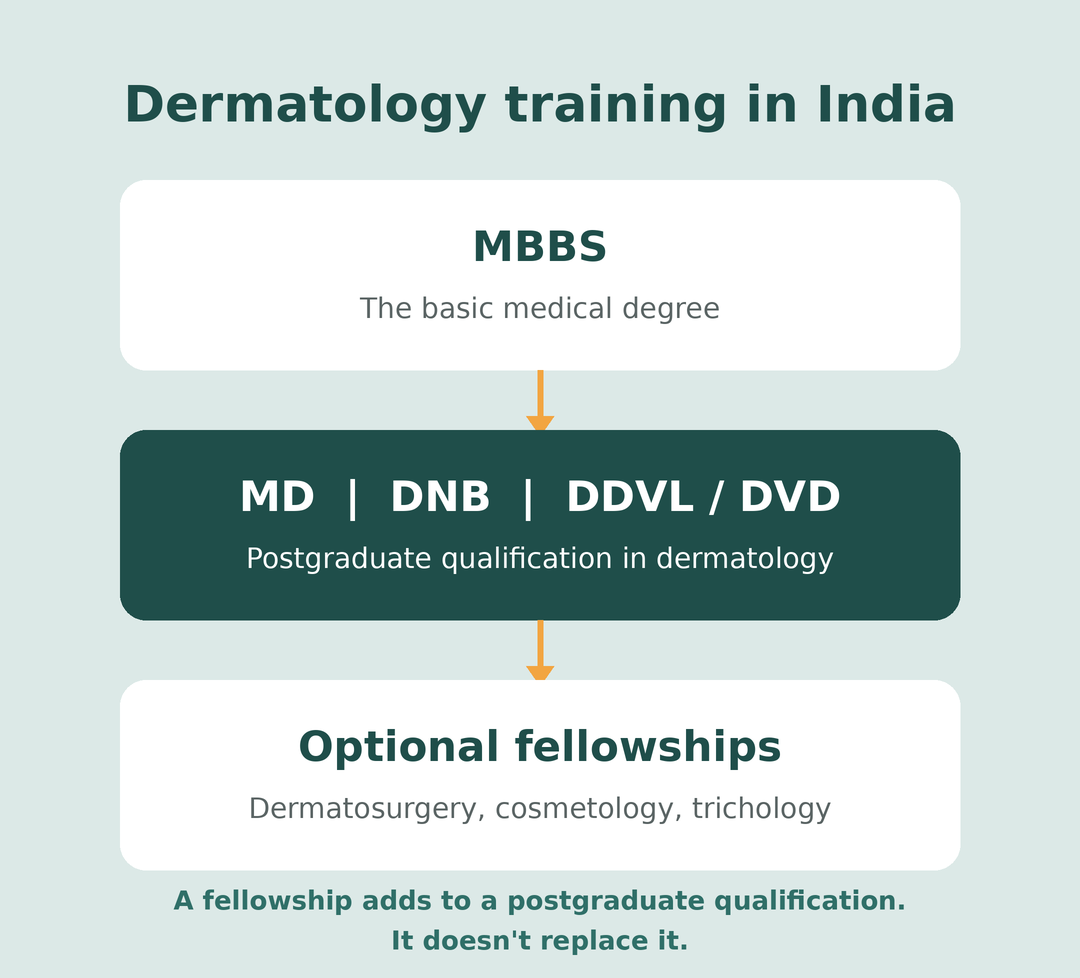
A dermatologist completes MBBS and then postgraduate training in dermatology, venereology and leprosy. They are trained to diagnose diseases of the skin, hair, nails and mucous membranes, prescribe medicines, and carry out minor procedures such as biopsies and mole removal.
Qualifications you may see in India
| Qualification | What it means |
|---|---|
| MBBS | The basic medical degree. The person is a doctor, but this alone is not a dermatology specialisation. |
| MD (Dermatology, Venereology & Leprosy) | A postgraduate degree in dermatology. |
| DNB (Dermatology) | A postgraduate qualification awarded by the National Board of Examinations. |
| DDVL / DVD | A postgraduate diploma in dermatology, venereology and leprosy. |
| Fellowship (dermatosurgery, cosmetology, trichology) | Additional training after qualifying. It adds depth but does not replace a postgraduate dermatology qualification. |
| Cosmetology or aesthetician diploma | Training in cosmetic and beauty procedures. It is not a medical degree. |
What that training lets a dermatologist do
- Tell look-alike conditions apart. Psoriasis, eczema and fungal infections can all appear as red, itchy, scaly patches, and each needs different treatment. Our guide on telling psoriasis from eczema shows how easily they are confused.
- Prescribe oral and topical medicines, and adjust them as your skin responds.
- Examine moles and growths and take a biopsy when something needs testing.
- Find the cause of hair loss rather than only treating the symptom.
- Manage complications if a peel, laser or injectable doesn't go as planned.
What is a skin clinic?
A skin clinic is a place where skin-related services are offered. That is all the name guarantees. In practice, clinics in and around PCMC tend to fall into three types.
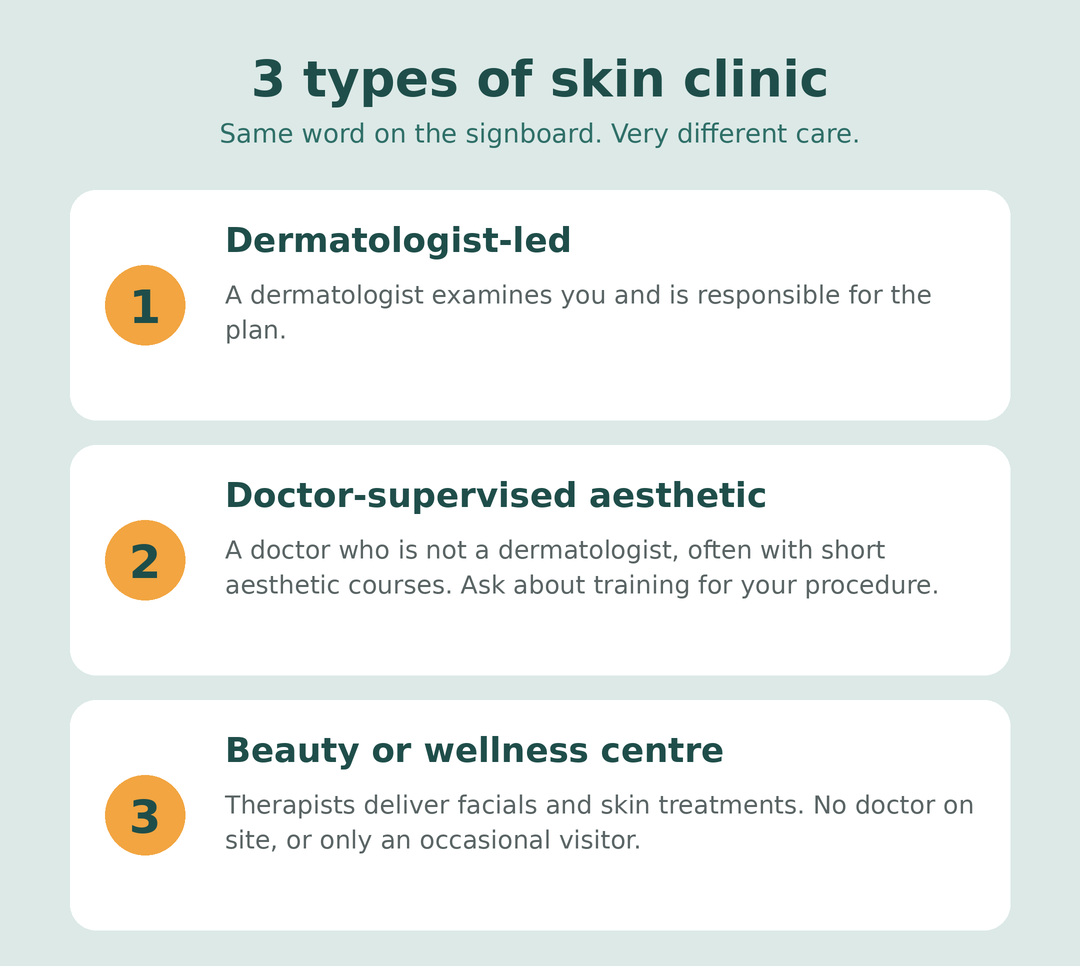
Type 1: The dermatologist-led clinic
A qualified dermatologist examines each new patient, decides the diagnosis and treatment, and is responsible for the plan. Cosmetic services such as facials or laser sessions sit inside that medical plan.
Type 2: The doctor-supervised aesthetic clinic
The clinic is run by a doctor who is not a dermatologist, often with short courses in aesthetic procedures. Many such doctors handle routine, low-risk treatments well. The questions to ask are what training they have for the specific procedure you want, and what happens if a problem needs specialist care.
Type 3: The beauty or wellness centre
Facials and skin treatments are delivered by trained therapists, with no doctor on site or only an occasional visiting one. This can suit grooming and maintenance. It is not the right place to take a rash, a spreading pigment patch or a changing mole. Our post on dermatologist vs cosmetologist goes deeper into this split.
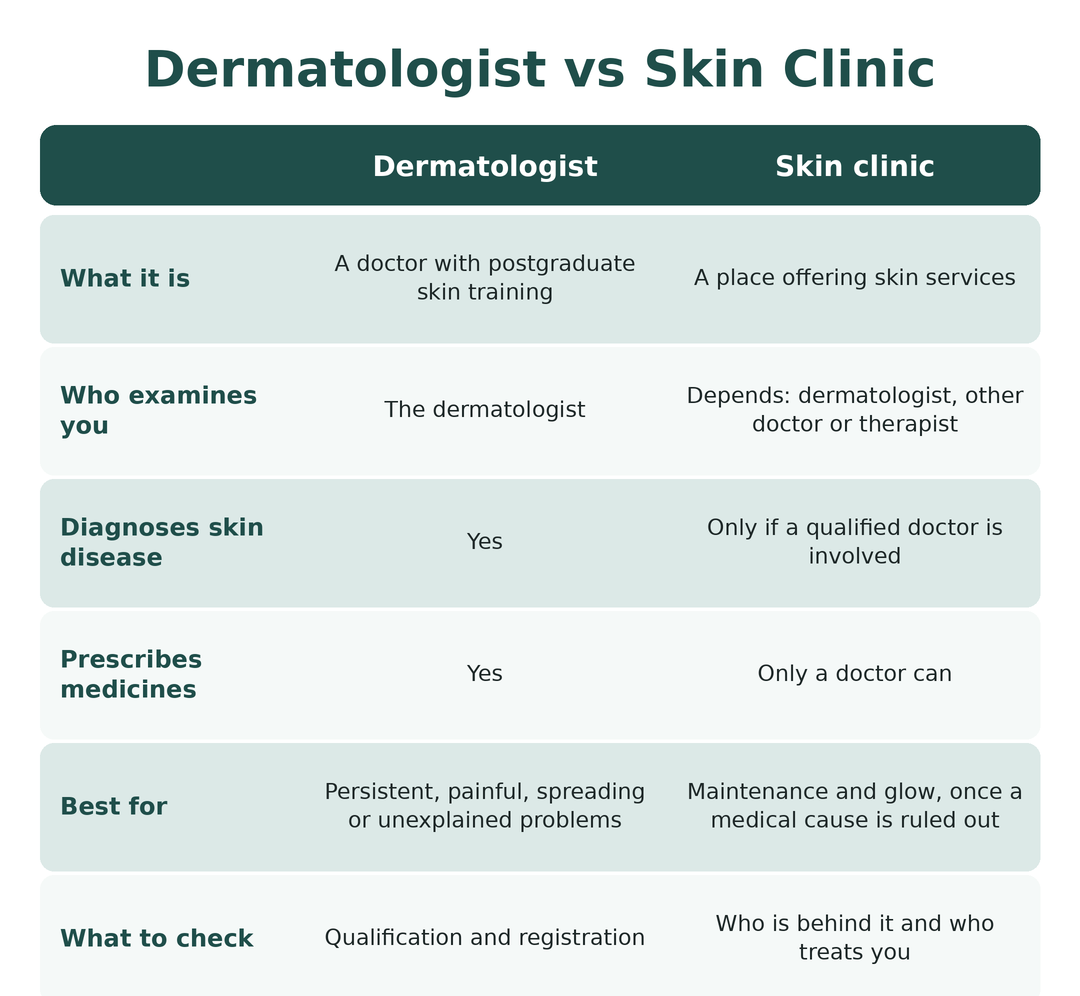
Skin clinic vs dermatologist: side by side
| Aspect | Dermatologist | Skin clinic |
|---|---|---|
| What it is | A doctor with postgraduate dermatology training | A place offering skin services |
| Who examines you | The dermatologist | Depends on the clinic: a dermatologist, another doctor, or a therapist |
| Diagnoses skin disease | Yes | Only if a qualified doctor is involved |
| Prescribes medicines | Yes | Only a doctor can; a therapist cannot |
| Typical services | Treatment of acne, eczema, psoriasis, vitiligo, hair loss; biopsies; many also offer cosmetic procedures | Facials, peels, laser sessions, skin and hair treatments |
| Best for | Persistent, painful, spreading or unexplained problems | Maintenance, glow and cosmetic goals, once a medical cause is ruled out |
| What to check | Qualification and registration | Who is behind it, and who performs your treatment |
Which one do you need?
Let your problem decide, not the signboard.
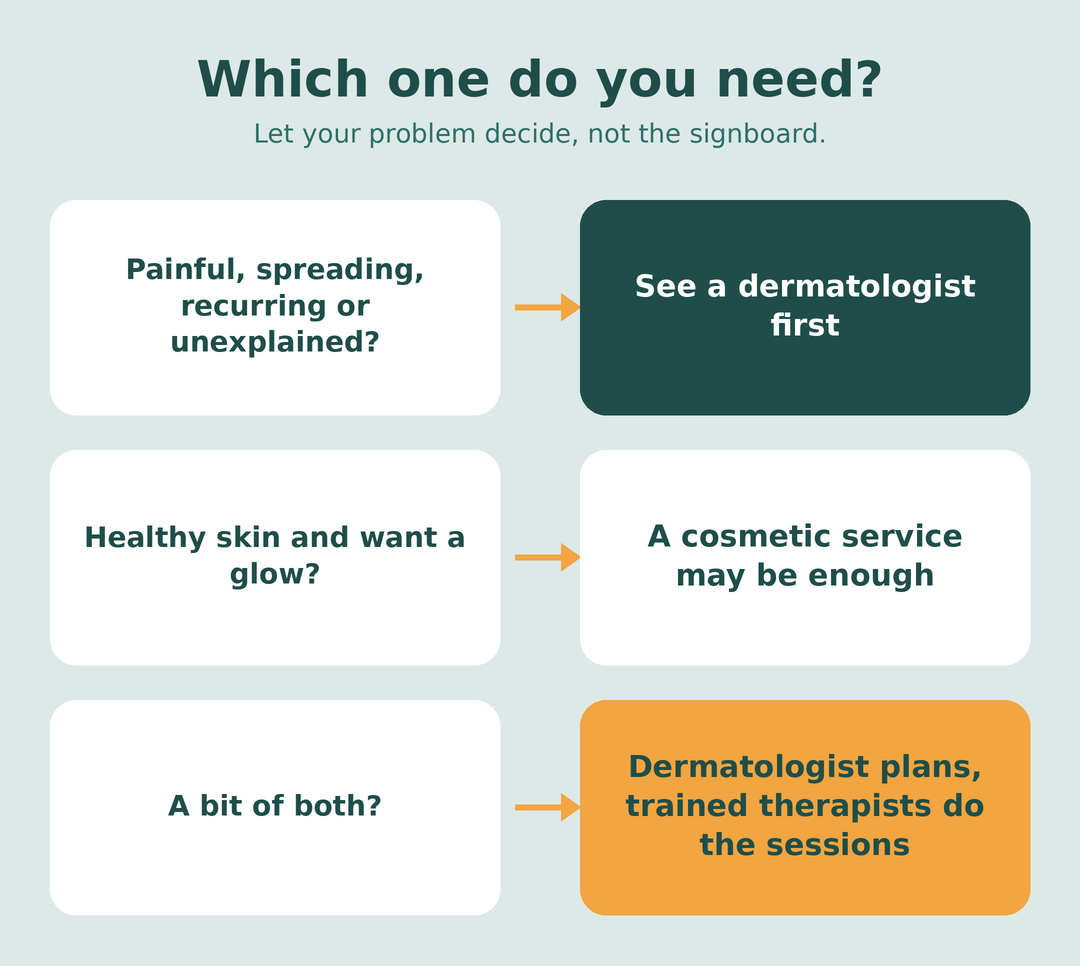
See a dermatologist first if you have:
- Acne that is painful, leaves marks, keeps returning, or hasn't settled after a few weeks of over-the-counter products
- Hair fall that is sudden, patchy or ongoing
- Itchy, scaly, white or darkening patches that you can't explain
- A mole that has changed in size, colour or shape, or that bleeds
- A rash after a new medicine or product
- A problem that has been "treated" several times without lasting change
Guessing at the cause is often what keeps a condition going. We explain why in why professional diagnosis beats self-treatment.
A cosmetic service may be enough if:
- Your skin is healthy and you want a glow before an event
- You want routine maintenance such as a hydrating facial. If you're comparing options, see chemical peel vs HydraFacial
- You want a procedure like laser hair reduction and have had a quick skin assessment first
When you need both
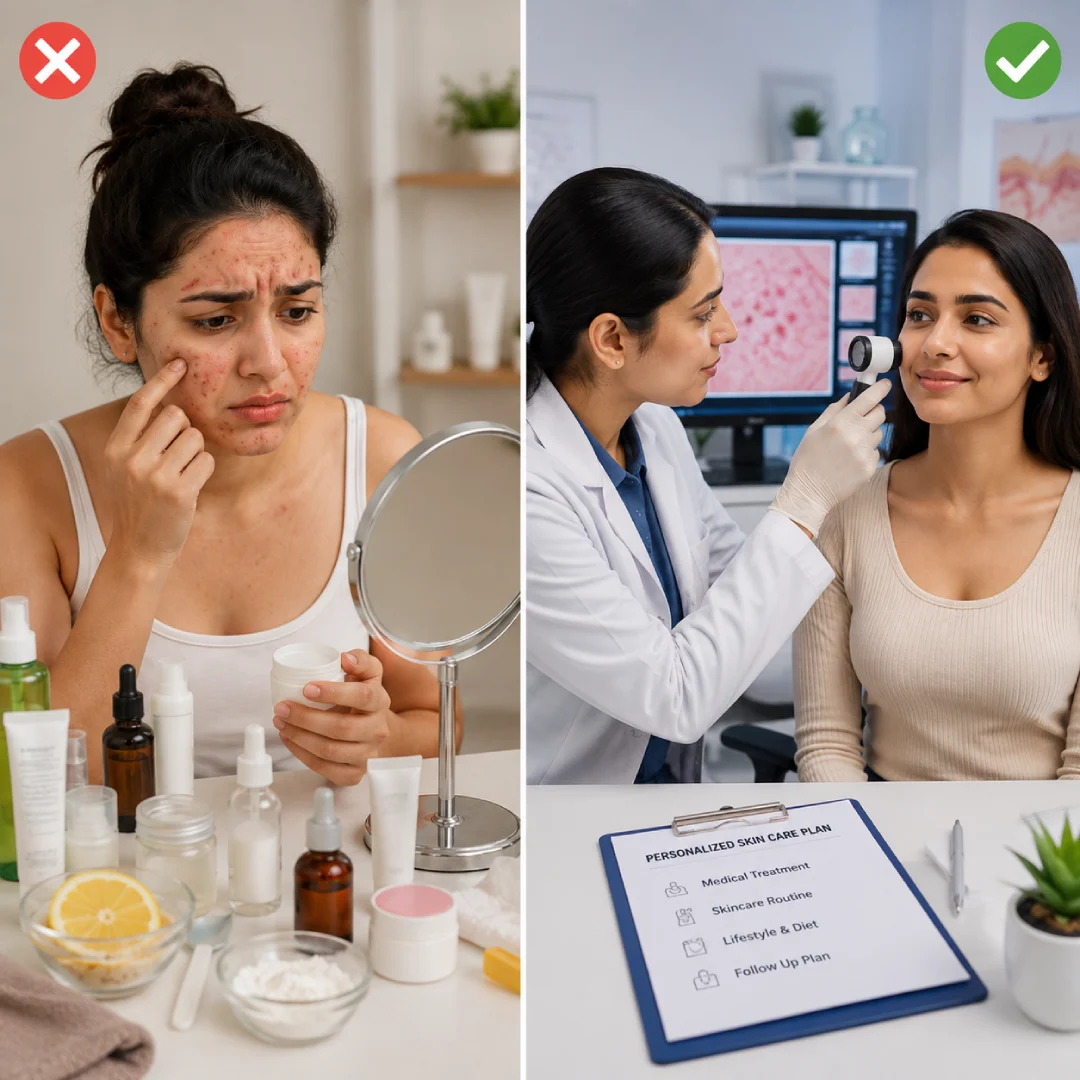
Often the best result comes from combining them. Take acne scars as an example: the dermatologist first brings active acne under control, then plans scar treatments such as microneedling or peels, and trained therapists carry out the sessions under that plan. Treating scars while acne is still active tends to waste time and money.
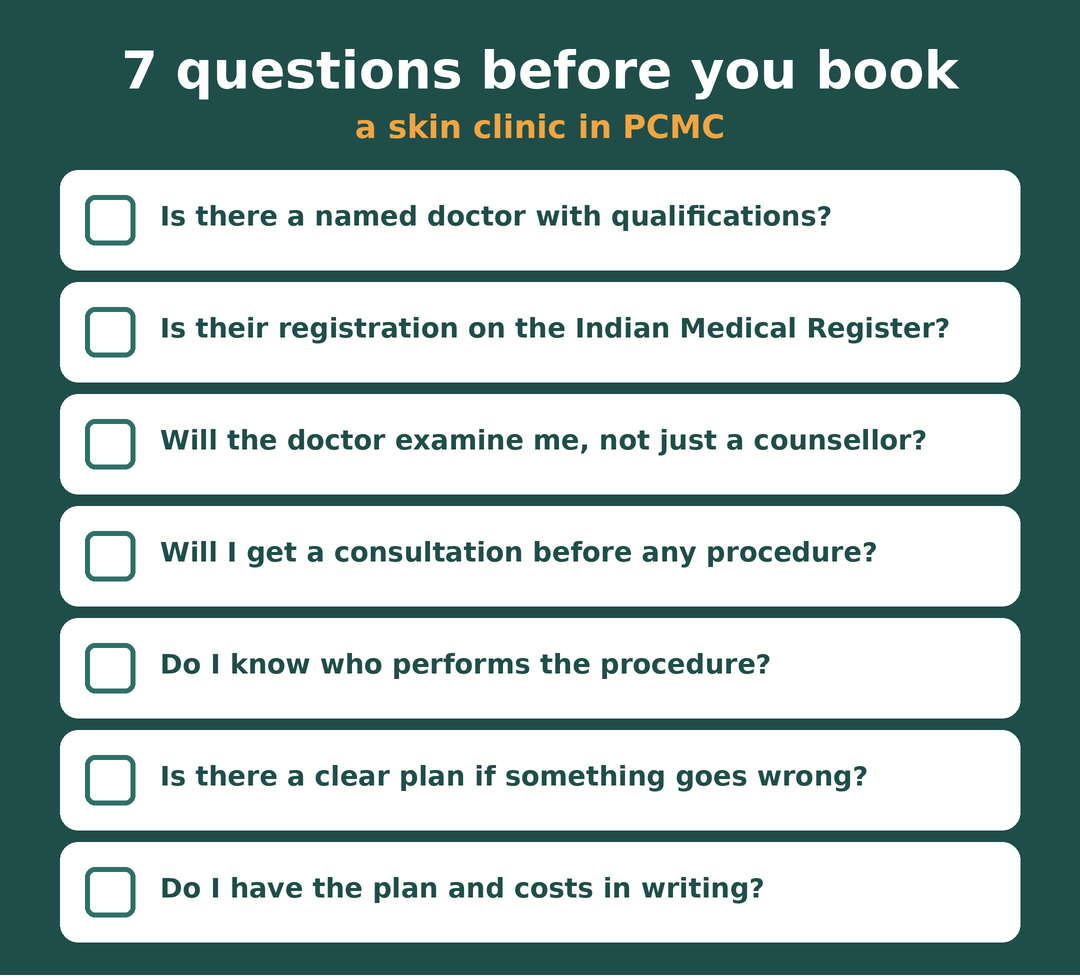
How to check who is behind a skin clinic in PCMC
This takes ten minutes and tells you more than any review. For a wider checklist, see how to choose the right skin clinic.
- Look for a named doctor. The website or signboard should show a name and qualifications. "Our expert team" with no names is a gap.
- Check registration. Doctors in India must be registered. You can search the Indian Medical Register on the National Medical Commission website (nmc.org.in) by name or registration number, and the Maharashtra Medical Council is the state body for local registrations.
- Ask who will examine you. For a new problem it should be the doctor, not a receptionist or sales counsellor.
- Expect a consultation before any procedure. You should hear the diagnosis, the options, and roughly how many sessions to expect.
- Ask who performs the procedure and under whose supervision.
- Ask what happens if something goes wrong. A good clinic has a clear answer about follow-up and who to call.
- Ask for the plan and costs in writing, including the number of sessions and what each one involves.
Red flags worth walking away from
- Package prices quoted before anyone has examined your skin
- "Guaranteed" or "permanent" results
- The same treatment recommended for every problem
- No named doctor, or qualifications you can't verify
- Pressure to prepay for a large package on the first visit
- No clear answer about which product or device will be used
A note for dermatology students
If you are studying dermatology, this question is a useful way to think about scope of practice. The specialty spans medical, surgical and cosmetic work, and "clinic" only describes the setting where it is practised. The postgraduate qualification (MD, DNB or DVD/DDVL) defines what a practitioner is trained to diagnose and manage. Fellowships in dermatosurgery, cosmetology and trichology then add procedural depth on top of it. Patients rarely see that distinction, which is why explaining it clearly matters.
How we work at Bodysutra Clinique
At Bodysutra Clinique, care is led by Dr. Vrushali Nikam (MBBS, DDVL, FRGUHS in Trichology & Hair Transplant Surgery), who also completed a fellowship in surgical dermatology, cosmetology and trichology at Victoria Hospital, Bengaluru.
The approach starts with diagnosis and then moves to treatment, covering medical conditions through our dermatology treatments, along with hair, laser, facial and cosmetic services. The clinic is at Office 102, First Floor, Malan Plaza, DP Road, Rahatani, Pimpri-Chinchwad 411017. If you live in Pimple Saudagar, Wakad, Baner or Hinjewadi, see our page on the skin clinic in Pimple Saudagar for details, or book a consultation directly.
Before you book anywhere, ask one question: who will examine my skin? The answer tells you most of what the signboard doesn't.
Frequently asked questions
Is a skin clinic the same as a dermatologist?
No. A skin clinic is a place that offers skin services, while a dermatologist is a doctor with postgraduate training in skin, hair and nail conditions. A clinic may be run by a dermatologist, by another kind of doctor, or by non-medical staff, so check who actually examines and treats you.
Is a skin specialist the same as a dermatologist?
Not necessarily. "Skin specialist" is a general phrase and doesn't confirm a dermatology qualification. Ask for the person's degree (MD, DNB, DVD or DDVL in dermatology) and registration details before assuming they are a dermatologist.
How do I check whether a doctor in PCMC is registered?
Search the Indian Medical Register on the National Medical Commission website (nmc.org.in) using the doctor's name or registration number. Registration confirms the person is a licensed doctor. The clinic should also be able to show their dermatology qualification.
Should I see a dermatologist or go to a skin clinic for acne?
Start with a dermatologist if your acne is painful, leaves marks, keeps returning, or hasn't improved after a few weeks of over-the-counter products. Acne can have hormonal and other causes that need a medical assessment. Facials can be added later as supportive care.
Can a dermatologist also do cosmetic treatments like peels, lasers or Botox?
Many do, especially those with additional training in cosmetology or dermatosurgery. Ask about their specific training for the procedure you want, which devices or products are used, and who will perform each session.
Can I see a dermatologist for diagnosis and a clinic for facials?
Yes, and many people do. The dermatologist's plan should come first for any medical concern, and facials or similar services can support it afterwards. Tell your facial provider about any medicines you are using, since some treatments don't mix well with certain prescriptions.
What should I bring to my first skin or hair appointment?
Bring a list of the products you use, any earlier prescriptions or reports, and photos showing how the problem looked at its worst. Also note when it started, what makes it better or worse, and any medicines or supplements you take.
Is a HydraFacial or chemical peel a medical treatment?
By themselves they are cosmetic procedures aimed at skin quality, not treatments for a diagnosed disease. They can still be part of a doctor-guided plan, for example after active acne is controlled. Which one suits you depends on your skin type and concerns, which is why an assessment helps.